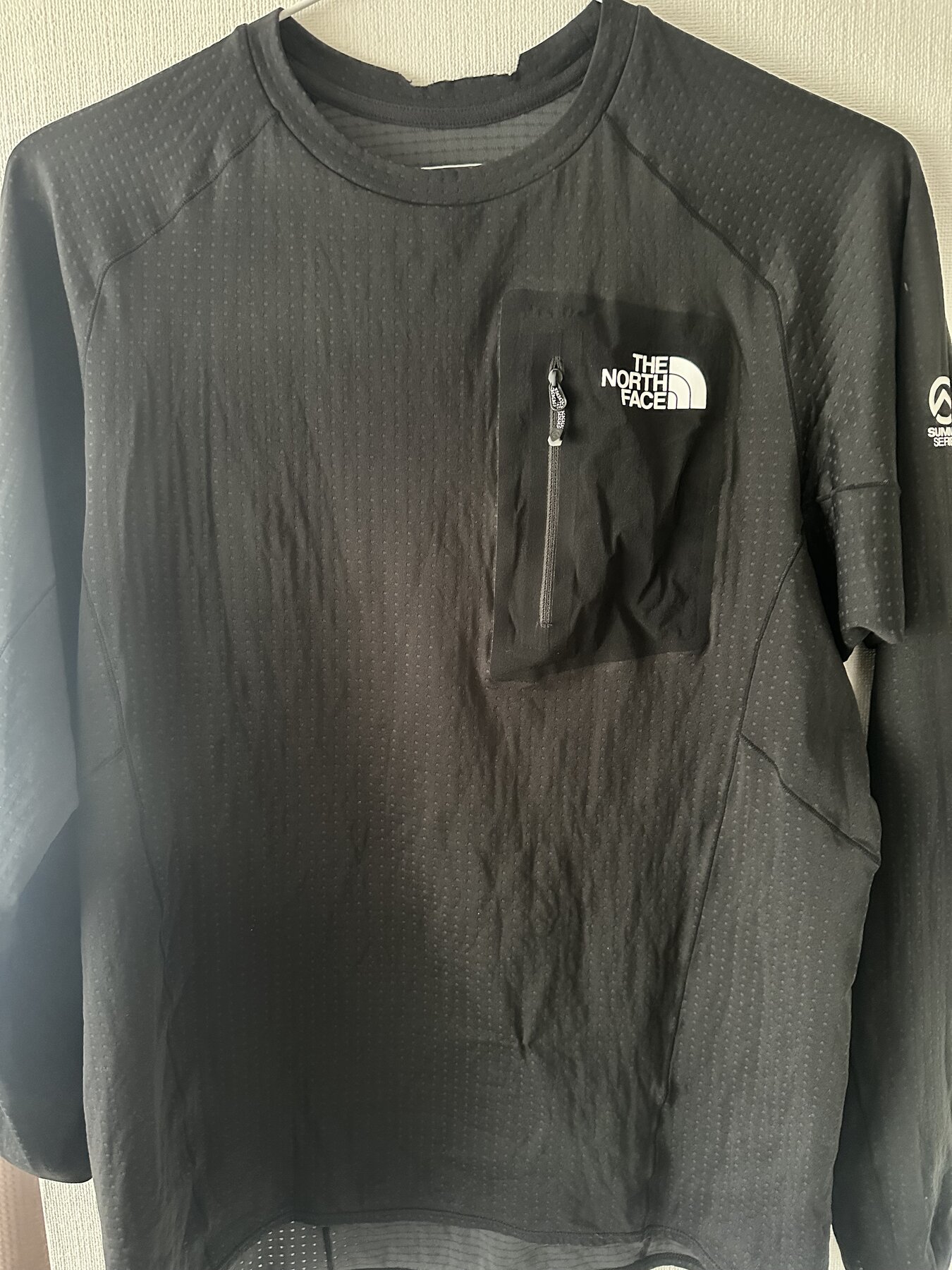
The North Face Dry Dot: 3–4 Years in a Japan-Market Base Layer
I’ve worn this Dry Dot for three or four years now. As a hiking base layer it’s very good. It’s a standard on the trails here — you see a lot of them — and after using one for years, the reason is clear.
The comfort when you’re sweating is the main thing
You sweat a lot on a long climb. The North Face describes Dry Dot as a two-layer construction — a hydrophobic “dry” layer against the skin and a wicking/spreading layer on the outside — that moves sweat off the skin to dry.
My experience over 3–4 years matches that: I don’t end up in that clammy, stuck-to-you state. I haven’t verified the numbers; I’ve just kept wearing it because the comfort holds up on long days.
Long sleeves = sun protection up high
In the higher mountains I can wear long sleeves for sun protection and still move comfortably. In a low-elevation Japanese summer, long sleeves sound hot — but higher up the sun is strong while the air isn’t that warm, and covering skin without the sweat penalty is worth a lot to me.
The chest zip pocket is better than I expected
There’s a small zip pocket on the chest. I thought it was a throwaway feature; it turns out to be a good spot for lip balm or a bit of trail food — things you want to reach fast.
Downside: black shows salt
When you sweat hard, the black picks up dried white salt marks. That’s a colour issue, not a performance one. It comes in greyish white, TNF orange, canal blue and black, so pick to taste.
Sizing runs a little small
It fits me slightly small; depending on your build, try a size up. But it’s a base layer, so bigger isn’t automatically better — fit against the skin changes how it performs, so try it on if you can.
What I’m really rating is the Dry Dot system
I use the crew neck; there are hooded and high-neck versions in the same family if you want more neck coverage. And under all of this I wear a Millet Drynamic Mesh against the skin.
What I actually rate isn’t the specific garment so much as the Dry Dot fabric idea. It’s not a standard just because it sells — put it through 3–4 years of real Japanese-mountain use and you see why it stuck.
How sweat management and comfort feel depends on your body, effort level, weather and sizing. Try it on where you can before choosing a size.
Products mentioned
THE NORTH FACE(ザ・ノース・フェイス) エクスペディションドライドットクルー NT12523
A long-sleeve layer I actually use for hiking and travel. I like how it stays off the skin after I start sweating.
The one I use
As an Amazon Associate, A Pretty Good Life earns from qualifying purchases.